
Nvidia Sells FE Cards at MSRP at PAX West: 5090, 5080, 5070 [2026]
Saturday, September 12, 2026Updated September 12, 2026: NVIDIA sold RTX 5090, 5080, and 5070 Founders Edition cards at MSRP in person at PAX West, Tom's Hardware's Jake Roach reported September 5. The 5090 at $1,999 against $5,000-plus street prices headlines a rare official at-list channel in a market where every other seller holds far above. Here is what was offered, how in-person MSRP sales work, why NVIDIA does them, and how to catch the next one.
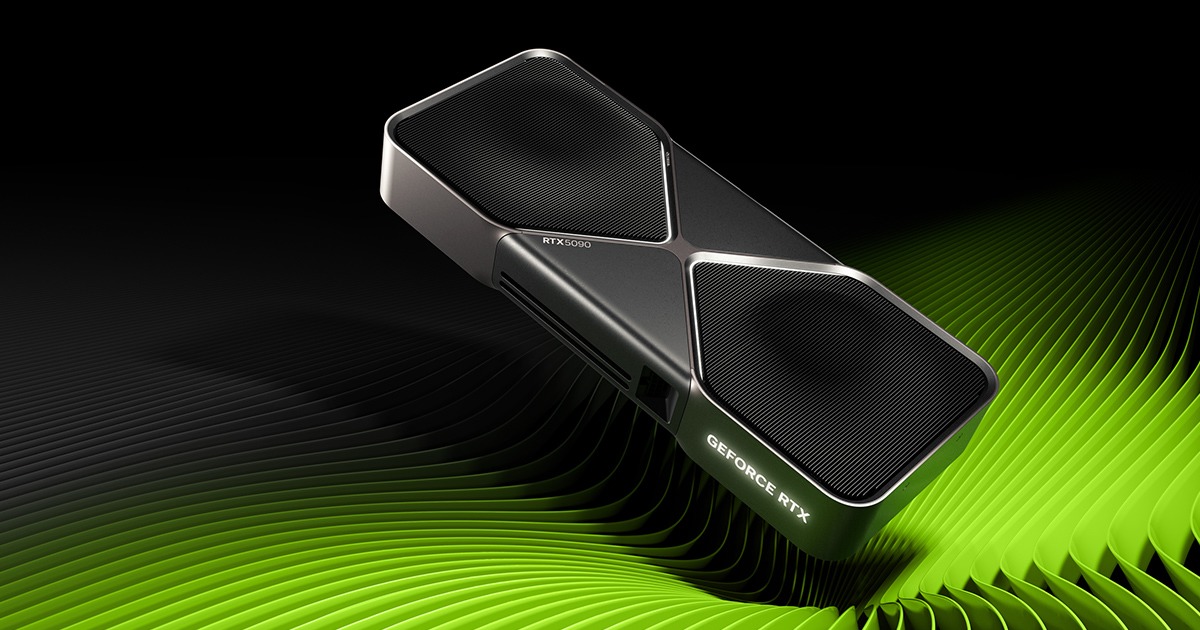
Table of Contents
- The PAX West Offer
- The Savings Math
- How In-Person MSRP Sales Work
- Why NVIDIA Sells at Shows
- The History of Event Sales
- How to Catch the Next One
- PAX West Offer at a Glance
- MSRP Channels Compared
- Street Context: What Everyone Else Charges
- Bottom Line
- Frequently Asked Questions
1. The PAX West Offer
NVIDIA offered RTX 5090, RTX 5080, and RTX 5070 Founders Edition models at MSRP to in-person buyers at PAX West, per Tom's Hardware's September 5 report. Founders Edition cards are NVIDIA's own reference designs sold primarily through its channels, and event-floor sales put list-price stock directly into attendees' hands with no lottery beyond showing up.
The three-SKU spread covers the whole high end: the $1,999 flagship 5090, the $999 5080, and the $549 5070. Notably absent is the 5070 Ti, the volume card whose $992 street average we tracked in our September street-price analysis. FE supply skews toward halo and bookend models rather than the mid-range heart of demand.
PAX West ran its usual late-August Seattle slot, making this a show-floor story with a short window. Stock quantities went unreported, and event sales historically cap at one or two units per buyer. The offer existed. Its depth is unknown.
2. The Savings Math
The 5090 tier carries the headline. At $1,999 MSRP against street prices at or above $5,000 documented in our 5090 pricing coverage, an in-person FE purchase saves roughly $3,000, more than the card's own list price again. No discount structure in retail GPUs produces numbers like that because no retail gap runs that wide.
The 5080 math is nearly as stark. At $999 MSRP against $1,500-plus major-retailer pricing, the saving approaches $600 before tax, comparable to the Walmart clearance find's $546 tag discount but available to anyone in line rather than one shopper in Florida. The 5070 at $549 MSRP saves smaller absolute dollars against its milder street premium, but percentage-wise still beats any online deal tracked this quarter.
Travel costs bound the arbitrage. A Seattle trip for a non-local costs more than the 5070 saving and roughly matches the 5080 saving, leaving the 5090 as the only tier where travel clearly pays. Locals and attendees already going win at every tier. Event MSRP is a subsidy for presence, not a national pricing policy.
3. How In-Person MSRP Sales Work
The mechanics follow NVIDIA's established event playbook. Stock sits at the company booth or a partnered event store, sales run during show hours while supply lasts, buyers queue with purchase limits enforcing one unit per person or household, and payment processes at list with local tax. No online queue, no bot race, no bundle requirements. Physical presence is the entire anti-scalper apparatus.
Presence works as verification where captchas fail. Bots cannot stand in line, mule networks face per-person limits and ID checks, and quantities stay small enough that clearing the shelf means buying one card. The result is allocation by patience rather than automation, which favors enthusiasts over operations.
Limits also cap the story's scale. A few hundred cards at a convention do not move national averages, and NVIDIA knows it. Event sales manage sentiment and headlines while leaving volume economics untouched. Buyers win individually. The market does not notice.
4. Why NVIDIA Sells at Shows
MSRP is a promise NVIDIA otherwise struggles to keep. With board partners and retailers pricing far above list for over a year, the company's own price tags read as fiction everywhere except its event booths and sporadic online drops. Selling at list in person demonstrates the price is real somewhere, preserving MSRP credibility at minimum viable volume.
Enthusiast goodwill is the second currency. Convention buyers are reviewers, streamers, community organizers, and forum regulars whose purchase stories circulate for months. Every $1,999 5090 handed over in Seattle becomes a retold anecdote countering scalper narratives. Marketing spend cannot buy that sentiment at any price, and NVIDIA spends inventory instead.
The third motive is data and control. Direct sales cut out partner margins and retail markups entirely, showing NVIDIA exactly what list-price demand looks like unmediated. Sold-out-in-hours event stock argues demand vastly exceeds supply at MSRP, which informs allocation without conceding pricing power. The company learns while appearing generous.
5. The History of Event Sales
NVIDIA has run event and drop-based MSRP channels for years. Verified Priority Access programs, GeForce Experience-gated drops, and convention sales all serve the same function: moving limited list-price stock past bots to humans. Each program lasts until its mechanism gets gamed, then rotates. In-person sales resist gaming longest because the cost of attendance exceeds most scalping margins except at the very top tier.
The 5090's $3,000 street gap breaks the historical pattern by scale. Previous generations saw event MSRP save hundreds. This generation's flagship gap saves thousands, which changes who travels for cards and how quickly event stock clears. Arbitrage math that once favored locals now favors flights, and future events will draw proportionally larger crowds hunting proportionally larger discounts.
Expect the mechanism to tighten in response. Tighter per-person limits, badge-linked purchases, or lottery pre-registration would all follow if PAX West stock vaporized instantly. Each tightening preserves fairness while shrinking access, the standard lifecycle of every MSRP channel ever created.
6. How to Catch the Next One
Watch event calendars where NVIDIA exhibits: PAX West and East, Gamescom, Computex-adjacent shows, and major CES presence. Announcements typically land days before doors open through Tom's Hardware, PC Gamer, or NVIDIA's own social channels. Lead time is short by design, since long notice builds unmanageable lines.
Prepare like stock exists and vanishes. Attend with badge sorted, payment ready, and knowledge of booth location from floor maps published pre-show. Arrive at opening, not midday. Know the per-person limit policy in advance where published. Have a fallback SKU in mind: when 5090s clear in an hour, 5080s and 5070s often last the day.
Do not plan travel around unconfirmed sales. NVIDIA announces some events and skips others with no pattern outsiders can trade on. Attend shows worth attending, treat MSRP stock as a windfall, and never spend the 5080 saving on flights to chase the 5090 saving. The math only works when presence is already paid for.
7. PAX West Offer at a Glance
| Card | MSRP at Show | Typical Street | Saving |
|---|---|---|---|
| RTX 5090 FE | $1,999 | $5,000-plus | About $3,000 |
| RTX 5080 FE | $999 | Over $1,500 retail | About $600 |
| RTX 5070 FE | $549 | Above list, mild premium | Modest, beats online deals |
| RTX 5070 Ti | Not offered | $992 street average | The gap in the lineup |
8. MSRP Channels Compared
| Channel | Access | Reliability |
|---|---|---|
| Event in-person sales | Badge plus queue, PAX West confirmed Sept 5 | High if attending, zero otherwise |
| Online FE drops | Store page racing, bot competition | Low, sells out in minutes |
| Walmart clearance | Physical shelf archaeology, single stores | Lottery with precedent: $702 and $562 5080s |
| Retail at MSRP | Effectively unavailable on current gen | Nonexistent outside events and anomalies |
9. Street Context: What Everyone Else Charges
Event MSRP means most where street runs hottest. The 5090's $5,000-plus going rate makes PAX's $1,999 the single largest documented discount on any current GPU, dwarfing even clearance miracles. The 5080's $1,500 retail makes $999 feel like a different product tier. These gaps measure market dysfunction as much as event generosity: the wider the street premium, the more heroic list-price sales appear.
Our street-price analysis puts September averages at $992 for the 5070 Ti and $821 for the 4070 Ti Super, with quarterly appreciation on current-gen product. Against that backdrop, FE stock at list is not a deal but a time machine to launch-day economics. Buyers experience 2025 pricing in a 2026 market, which explains the lines better than any marketing.
The 5070 Ti's absence from the PAX table deserves emphasis. The volume card with the $243 street premium went unserved while halo tiers got subsidies. Whether supply constraints or margin choices explain the gap, mid-range buyers gained nothing from this event. Presence subsidizes flagships first.
10. Bottom Line
PAX West proved MSRP still exists wherever NVIDIA physically hands you the box: 5090 at $1,999, 5080 at $999, 5070 at $549, savings from modest to $3,000 against street. The channel serves attendees, not markets, and its scale cannot dent national averages. Watch event calendars, arrive early, know your fallback SKU, and never fly somewhere solely for stock. List price lives on now only in convention halls and clearance aisles. Plan accordingly.
Frequently Asked Questions
Q: Did NVIDIA sell GPUs at MSRP at PAX West?
A: Yes. Tom's Hardware reported September 5 that RTX 5090, 5080, and 5070 Founders Edition cards sold at MSRP to in-person buyers, with typical per-person limits and while-show-stock-lasted availability.
Q: How much could buyers save?
A: About $3,000 on the 5090 ($1,999 vs $5,000-plus street), $600 on the 5080 ($999 vs $1,500-plus retail), and a smaller but real saving on the $549 5070. Travel costs bound the arbitrage for non-locals.
Q: Was the 5070 Ti available?
A: No. The offer covered 5090, 5080, and 5070 FE only. The volume mid-range card stayed off the table, exact reasons unreported.
Q: Why does NVIDIA sell at events?
A: MSRP credibility, enthusiast goodwill that circulates for months, and direct demand data without partner margins. Event stock manages sentiment while leaving volume economics untouched.
Q: How do I catch the next event sale?
A: Track NVIDIA's presence at PAX, Gamescom, and major shows through hardware press, attend with badge and payment ready, arrive at opening, and hold a fallback SKU. Never travel solely for unconfirmed stock.
Q: Are there other ways to pay MSRP?
A: Online FE drops sell out in minutes to bots, and Walmart clearance produced $702 and $562 5080s plus an $80 5060 Ti for single-store hunters. Events plus clearance aisles are currently the only sub-street channels.
Byline: Indie Kings | September 12, 2026
Labels: Hardware
Related: RTX 5090 Melts After DLSS5, Prices Hit $5,090 | RTX 5070 Ti Street Hits $992 vs $749 | DDR5 Hits $400 for 32GB as Prices Soar